
SLEG commemorates the legacy of late Associate Professor Ngeyi Ruth Kanyongolo
The School of Law, Economics and Government’s Department of Private Law and Public Law, together with the Department of Clinical Legal Education, organised a staff-student seminar on 29 October 2026 to commemorate the work and legacy of the late Dr Ngeyi Ruth Kanyongolo, who was a distinguished Associate Professor of Law.
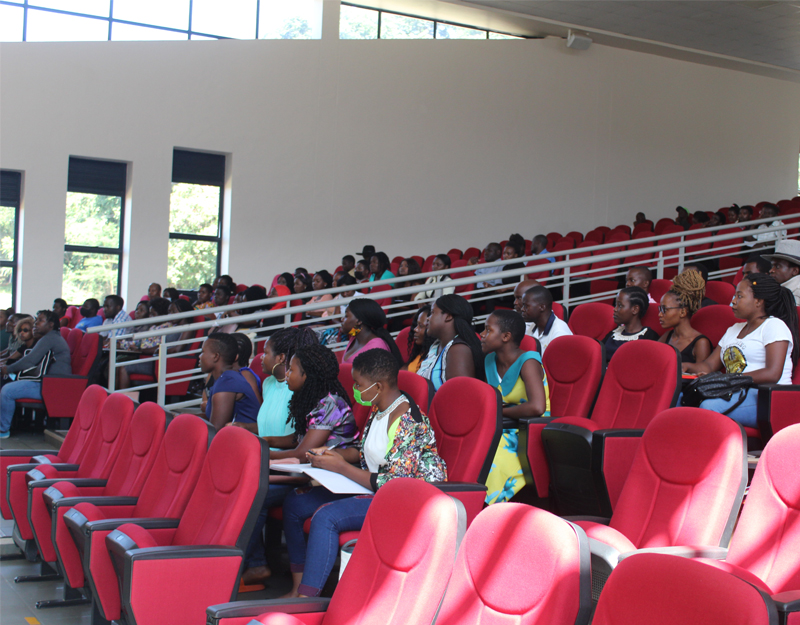
The seminar was held in the Law Boardroom and was attended by law students, staff members, practitioners and professionals from various industries.
The aim of the seminar was to engage staff and students in reflecting on the late Dr Kanyongolo’s contributions and to ensure that her work and the values she upheld continue to inspire future generations.
During the seminar, Professor Edrinnie Kayambazinthu shared her memories of the late Dr Kanyongolo. She reflected on her remarkable journey, highlighting her commitment to knowledge, leadership and service.
“Ngeyi’s life is not simply the story of a lawyer who rose through the academic ranks to become a university Vice-Chancellor, but it is the story of a woman who remarkably treasured knowledge and used it as an instrument of service. She used leadership as an opportunity to open doors, and the law as a means of advancing justice and human dignity, which she fought for even as a unionist,” said Professor Kayambazinthu.
In her remarks, the Head of the Department of Private Law and Public Law, Dr Bernadette Malunga, highlighted the late Dr Kanyongolo’s commitment to academic writing, mentorship and the promotion of emerging scholars.
She explained that Dr Kanyongolo’s writing was not solely focused on her own achievementsbut she actively promoted and mentored others.
“Through collaborative publications, she encouraged young academics, particularly those who were new to the university, to publish their work. By inviting them to co-author papers, she helped build their confidence and strengthen their academic writing skills,” Dr Malunga said
Dr Malunga further noted that Dr Kanyongolo was deeply committed to mentoring students, interacting with them as a friend while providing academic guidance and support.
As part of the seminar, students presented papers on labour rights, gender issues, the economy and other related topics that reflected Dr Kanyongolo’s areas of interest.
Among the papers presented was one titled “Beyond Formal Equality: Gender, Labour Rights and the Protection of Women in Malawi’s Informal Economy,” alongside other presentations examining issues relevant to her academic interests and commitment to justice.
The seminar provided an opportunity for staff, students and practitioners to reflect on Dr Kanyongolo’s contributions to the academia, mentorship and access to justice, while reaffirming the importance of carrying forward the values she championed throughout her career.