

Staff spotlight: Dr. Steven Wandale
Meet Dr. Steven Wandale, a Senior Lecturer in Electronics in the Department of Physics and Electronics under the School of Natural and Applied Sciences at the University of Malawi (UNIMA).
As a lecturer in Electronics, he teaches both core and applied Electronics courses, including Device Electronics, Network Analysis, Electromagnetics, Signals and Systems, Digital Signal Processing, and TV Broadcast Engineering.
His work bridges advanced signal processing theory, sensor array optimisation, and
Dr. Wandale's journey into this field began during his undergraduate studies when he mastered antenna design, an achievement which earned him a UNICEF Malawi Seed Grant through the Innovation Hub at the Malawi Polytechnic (now MUBAS), where he developed a low-cost Digital Television (DTV) antenna under the mentorship of Dr. Chomora Mikeka.
"This early success inspired my deeper exploration of how signals received by antennas or sensors are processed at endpoints, fundamentally shaping my expertise in statistical and array signal processing architectures," he says.
He graduated in 2017 with a Bachelor of Education Sciences, majoring in Physics and Electronics, but winning the UNICEF Malawi Seed Grant remained a defining moment in his career because it sparked a lasting interest in signal processing and the transformation of raw sensor data into meaningful, actionable information.
To deepen this expertise, he pursued graduate studies at Yokohama National University in Japan under the prestigious Japanese Government MEXT (Monbukagakusho) Scholarship.
Under the supervision of Prof. Koichi Ichige, he earned both a Master of Engineering (2020) and a Doctor of Engineering (2023) in Electrical and Computer Engineering.
His doctoral research focused on novel sparse sensor array optimisation and the development of Artificial Intelligence/Machine Learning (AI/ML)-driven signal processing algorithms for automotive radar applications.
Following the completion of his doctorate, Dr. Wandale returned to UNIMA as a faculty member with a vision of applying advanced engineering knowledge to address Malawi's local challenges.
His work focuses on developing Internet of Things (IoT) and AI/ML-based solutions for sectors such as agriculture, healthcare, education, climate change, and environmental sustainability while mentoring the next generation of Malawian engineers.
Today, he leads three major research initiatives namely IoT and Data-Driven Smart Skip Bins for Municipal Solid Waste Management, funded by the UNDP Malawi Accelerator Labs; Resilient Soil Sensing: Smart Moisture and Nutrient Sensors with Intelligent Irrigation Systems for Sustainable Agriculture, partially funded through the Faculty-Student Programme (FSP) UniPod at MUBAS, where he is a SciPreneurship Awardee; and ongoing collaborative research with Prof. Ichige on sparse sensor array optimisation and computationally efficient signal processing algorithms for automotive radar applications in in-cabin vehicles sensing and advanced driver-assistance systems (ADAS).
His work is deeply collaborative, with key partnerships including projects with the Lilongwe and Zomba City Councils to implement IoT-enabled municipal waste management systems.
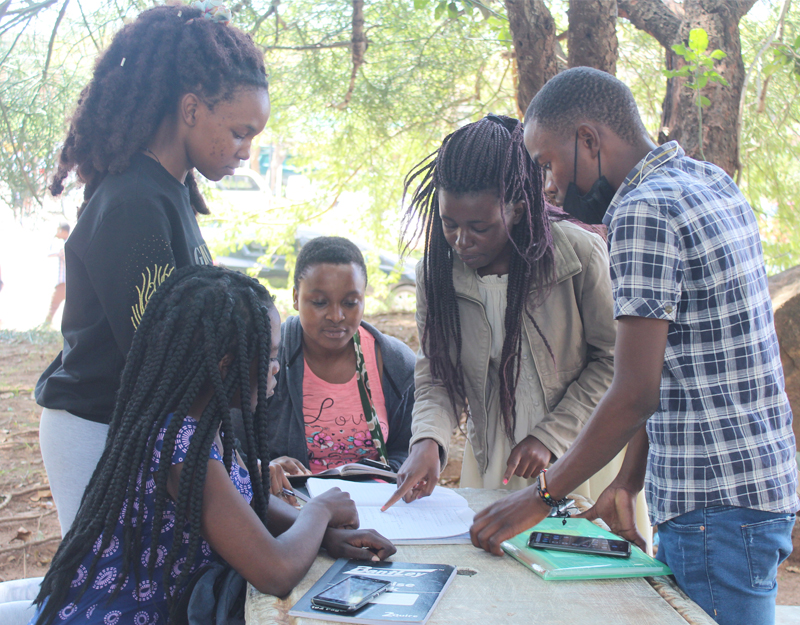
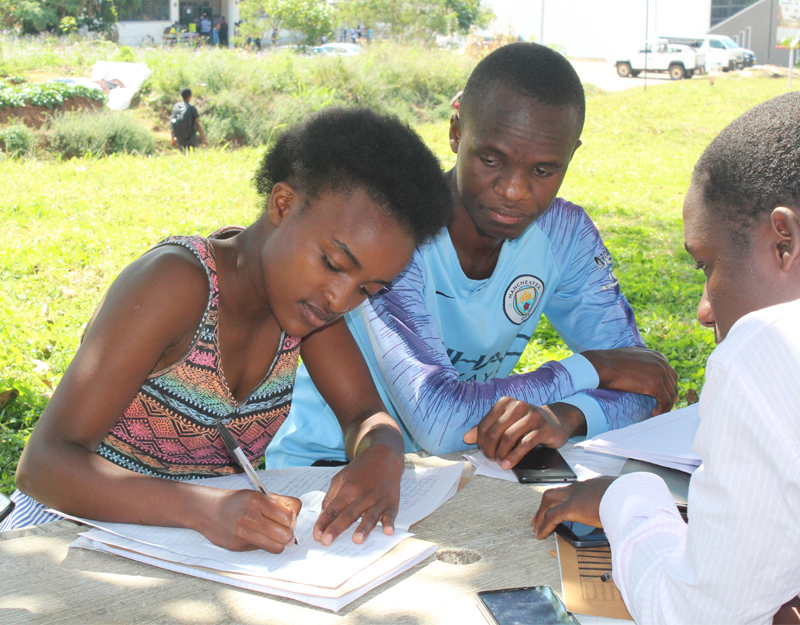
He also works closely with students through the Faculty-Student Programme, where they co-develop innovative technologies, including award-winning smart agriculture sensors.
Looking forward, Dr. Wandale aims to bridge global algorithmic frontiers with local societal impact.
Globally, he continues to advance the field of signal processing by developing computationally efficient array processing algorithms and innovative sparse sensor array designs, while locally he leverages these advanced smart sensing architectures and techniques to deploy high-precision, AI/ML-driven IoT solutions across agriculture, education, healthcare, and climate resilience.
For Dr. Wandale, teaching is far more than delivering lectures.
"Three joys define my academic life: witnessing students transform into problem-solvers who localise global technology; pioneering research that turns Malawi's challenges into springboards for innovation; and building legacy engineers who will help rewrite our nation's story. This trinity—mentorship, relevance, and legacy—is why I teach."
He credits much of his inspiration to his mentor, Dr. Mikeka, at whose guidance his academic journey was shaped.
"Dr. Mikeka passed me the torch, now I ignite others' potential. Passing forward this flame is my highest purpose," says Dr. Wandale.
Reflecting on the institution where his own academic journey began, Dr. Wandale believes UNIMA's greatest strength lies in its rich history and enduring legacy.
"As one of Malawi's oldest and most prestigious universities, UNIMA carries a strong tradition of academic excellence and national impact. Often regarded as the mother university, it has played a foundational role in shaping the country's academic and professional landscape," he explains.
Among his many accomplishments, completing his doctorate remains especially meaningful to him.
"Completing my doctorate was a significant milestone that I almost had to set aside due to unforeseen challenges. I'm deeply grateful for my partner's unwavering support, which played a crucial role in helping me see it through," says Dr. Wandale.
Outside the lecture room and research laboratory, Dr. Wandale enjoys finding balance through his personal interests. He is a big fun of anime, enjoys travelling whenever time allows, and finds gardening to be both peaceful and grounding.