
UNIMA Strengthens Quality Assurance Systems Through Committee Members’ Training
The University of Malawi (UNIMA) has completed a two-day Quality Assurance Committee Members’ Training Workshop aimed at strengthening the University’s capacity to implement its quality assurance systems and promote a culture of continuous quality improvement.
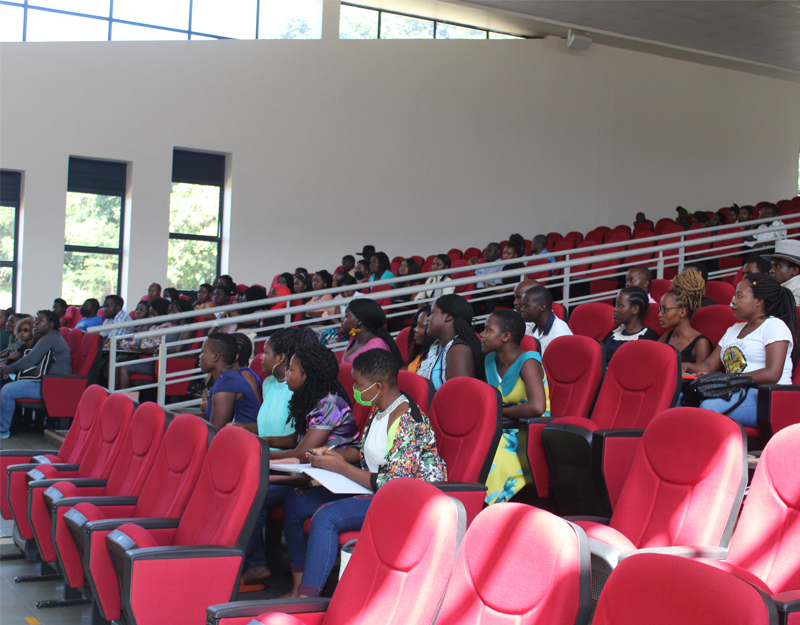
The training, held from 27 to 28 August 2026 under the theme “Building a Culture of Continuous Quality Improvement at the University of Malawi,” brought together a cross-section of academic and administrative staff.
The workshop was organised by the Office of Quality Assurance and Enhancement to equip members of Quality Assurance Committees with the knowledge and skills required to implement the University's quality assurance system and promote continuous quality improvement in line with National Council for Higher Education (NCHE) standards.
In her remarks, the Head of Quality Assurance and Enhancement, Dr Mervis Kamanga, emphasised the importance of the training in strengthening the understanding and practice of quality assurance across the University. She explained that quality assurance is an essential mechanism for ensuring that institutional processes, programmes and services meet the required standards while supporting continuous improvement.
Dr Kamanga stressed that the workshop provided an opportunity for members of the various Quality Assurance Committees to develop a shared understanding of quality assurance and their respective roles in ensuring that quality becomes embedded in the University's day-to-day operations.
In his opening remarks, the Deputy Vice-Chancellor, Dr Sunduzwayo Madise, called for collective responsibility in the pursuit of quality and excellence at UNIMA.
“Achieving quality and excellence requires staff to work together as a team. A strong quality assurance system is critical to the University's reaccreditation as well as the accreditation of new programmes being introduced by UNIMA,” Madise said
The Deputy Vice-Chancellor further challenged the University community to make quality assurance a driving force for excellence by introducing effective accountability mechanisms.
He urged staff to approach quality assurance not simply as a compliance requirement, but as an institutional responsibility and a framework that responds to what UNIMA needs to achieve its strategic objectives.
During the first day, participants engaged in sessions covering Quality Assurance in Higher Education, NCHE Special Needs Standards, and an Overview of the University of Malawi Internal Quality Assurance System.
The sessions provided participants with an opportunity to explore quality assurance concepts, relevant standards and the University's internal mechanisms for ensuring quality.
The second day focused on the practical roles of Quality Assurance Committees and mechanisms for monitoring and improving quality across the University.
Participants discussed the roles and responsibilities of Departmental, School and Institutional Quality Assurance Committees, as well as NCHE ODeL Standards and Guidelines.
The programme further covered Internal Quality Monitoring and QA Tools, academic programme development, monitoring, review and accreditation, and quality assurance reporting, evidence management and documentation.
A key outcome of the training was the development of Quality Assurance Committees' work plans, giving participants an opportunity to translate the knowledge and skills gained during the workshop into practical activities within their respective units.
The training marks an important step in UNIMA's efforts to strengthen its internal quality assurance mechanisms and foster a university-wide culture in which quality improvement, accountability and adherence to standards are embedded in teaching, learning, research and other institutional processes.
Through strengthened Quality Assurance Committees and greater collaboration across academic and administrative units, UNIMA seeks to ensure that quality assurance becomes an integral part of the University's pursuit of academic excellence and institutional effectiveness.