

Statisticians Host Training on Causal Inference in Health Research
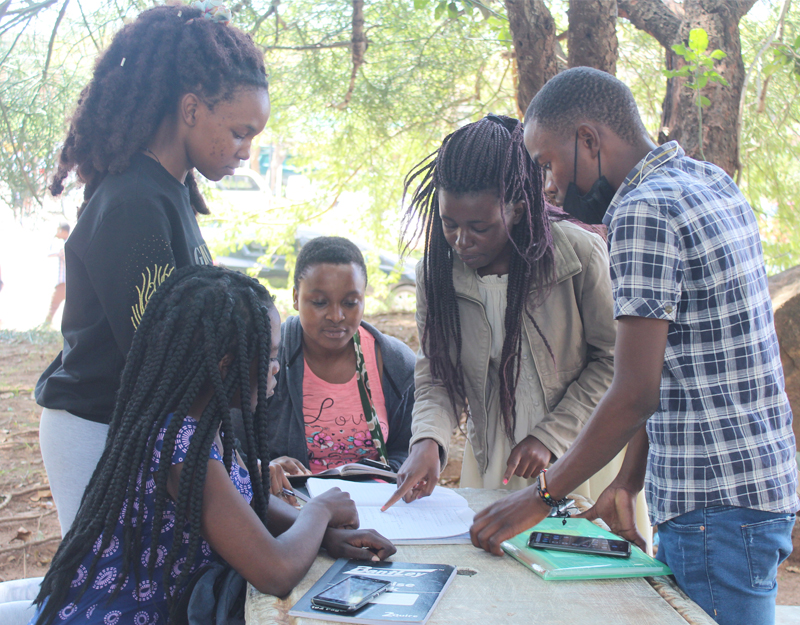
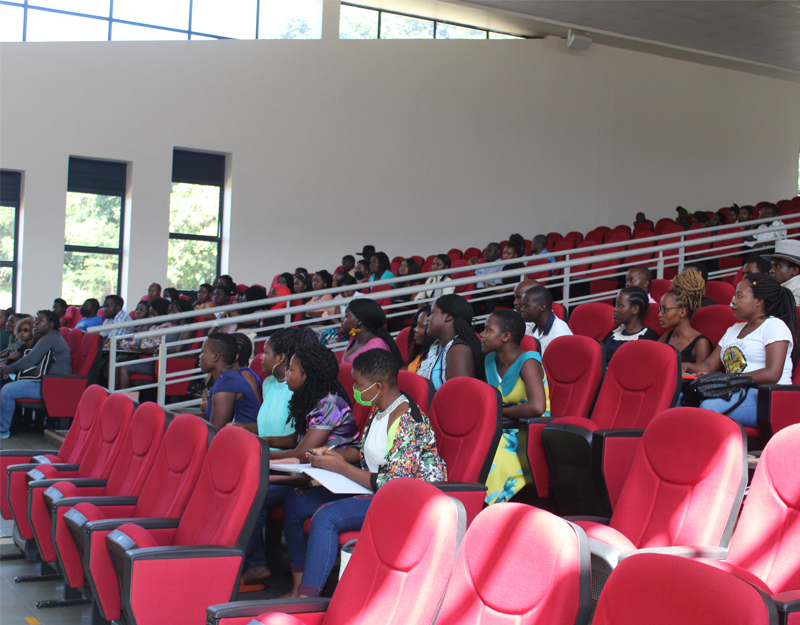
The University of Malawi, with support from the Sub-Saharan Africa Consortium for Advanced Biostatistics Training (SACCAB), conducted a three-day workshop at the Brown Chimphamba Laboratories on its Chirunga Campus from 10th to 12th February 2026. The workshop, themed “Introduction to Causal Inference for Observational Studies in Public Health Research,” was facilitated by Dr Halima Twabi from the Department of Mathematical Sciences in the School of Natural and Applied Sciences, and Professor Samuel Manda from the University of Pretoria.
The training attracted participants from various organisations, including Kamuzu University of Health Sciences (KUHES), Project HOPE Namibia, Malawi-Liverpool-Wellcome Trust (MLW), and the Institute of Public Opinion and Research (IPOR), among others. The function also involved the participation of postgraduate students from UNIMA.
Dr Halima Twabi explained that the overall aim of the workshop was to introduce participants, particularly those working with health research data, to the foundations of causal inference and to demonstrate how causal conclusions can be drawn from observational data.
“In health research, one would conduct randomized controlled trials (RCTs), particularly when assessing treatments,” she said. “However, in many health research problems, it would be unethical to randomize people into certain groups. In addition, it is sometimes impractical or too costly to conduct such experiments.”
Dr. Twabi added that drawing causal conclusions from observational data is challenging because researchers have no control over how the data is generated. Nevertheless, statistical methods can be applied to strengthen the analysis and support credible causal inferences. She pointed out that establishing causality is crucial, particularly for evidence-based policy. Policymakers need clear proof that a specific intervention directly causes an outcome, rather than merely being associated with it.
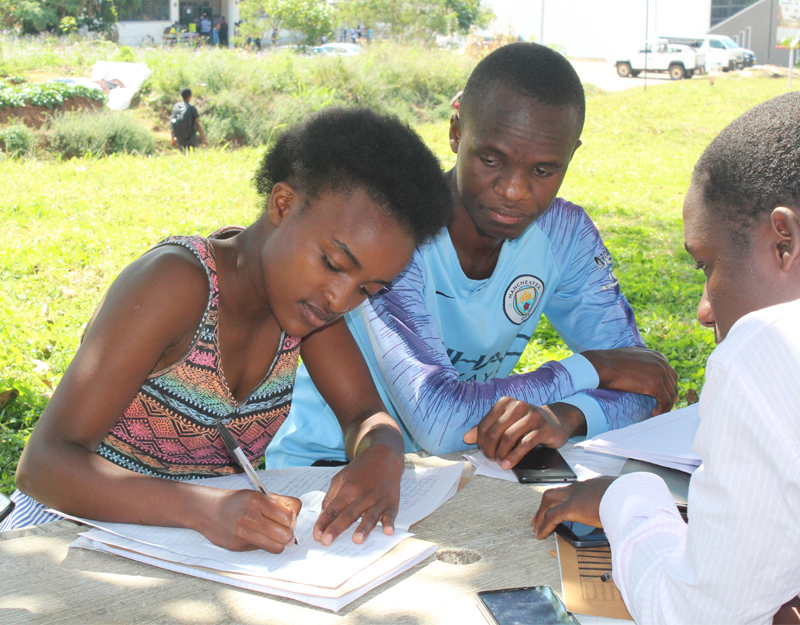
Twenty participants attended the training, which covered various topics, including confounding, selection bias, measurement bias, and introduction to propensity score methods (matching and weighting). It also involved a hands-on practical session on implementing propensity scores in R, among others.
Participants gained new knowledge and were equipped with practical skills. Ms Eneless Mponda, a postgraduate student at the University of Malawi, described the workshop as an eye-opening experience.
“Over three days, I gained a clear understanding of how to distinguish association from causation and how to apply causal inference methods in real-world public health research,” she said. “The sessions on directed acyclic graphs (DAGs), propensity score methods, and difference-in-differences analysis were highly practical, and the hands-on exercises in R gave me the confidence to implement these techniques on my own data.”
The workshop was successful, as reflected by strong participant engagement, insightful questions, and positive feedback, indicating a clearer understanding of causal inference and robust methods for drawing causal conclusions from observational data.