

Why Study Master of Science in Business Intelligence & Analytics at UNIMA
- This programme is accredited by the National Council for Higher Education (NCHE)
- You'll engage in a year-long paid work experience, and past students have had the opportunity to collaborate with esteemed organizations.
- You will be taught by experienced staff members with research and project experience in this subject area as shown in their profiles.
Teaching and learning
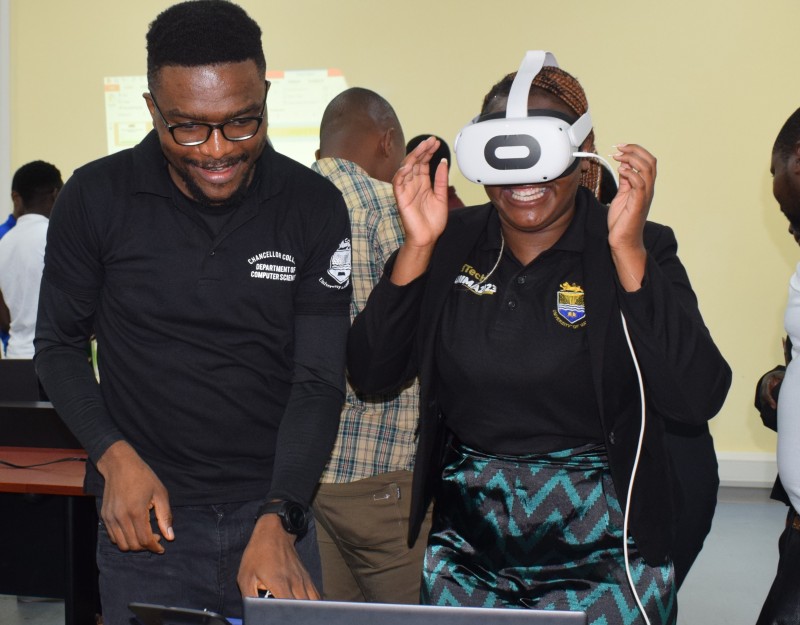
admission
Entry Requirements
How you're taught
Face to Face:
Traditional classroom learning which involves students and lecturer to directly interact and collaborate in real time discussions and hands on activities.
Online classes:
Some content is taught virtually and course materials, lectures, assignments, and discussions are done online mainly using moodle and google classroom.
View our learning modes
Master of Science in
BUSINESS INTELLIGENCE & ANALYTICS
The MSc in Business Intelligence and Analytics prepares graduates and professionals for high-impact roles in data-driven decision-making and organisational leadership. Every module connects directly to real-world applications, developing skills across business intelligence, data science, big data technologies, and ethical analytics practice.
Programme Structure
The programme runs over two years and four semesters. Year 1 covers core and elective coursework. Year 2 is dedicated to an independent research dissertation, with students developing their research proposal in Semester 2 of Year 1. Coursework comprises 10 modules: 8 core and 2 electives.
|
Module |
Year 1 – Sem 1 |
Year 1 – Sem 2 |
Year 2 |
|
Core Modules |
|||
Research Methodology |
✔ |
|
|
Project Management |
✔ |
|
|
Business Intelligence |
✔ |
|
|
Big Data |
✔ |
|
|
Business Management and Entrepreneurship |
✔ |
|
|
Information Systems in Organisations |
✔ |
|
|
Fundamentals of Data Science |
|
✔ |
|
Database Management and Cloud Computing |
|
✔ |
|
Master Thesis |
|
|
✔ |
|
Elective Modules (choose 2) |
|||
Geographic Information Systems |
|
✔ |
|
Distributed Systems |
|
✔ |
|
Information Technology Governance |
|
✔ |
|
Information Technology Risk Management |
|
✔ |
|
Expert Systems |
|
✔ |
|
Enterprise Architecture |
|
✔ |
|
Module Descriptions
Core Modules
Research Methodology
Builds the skills needed to design and carry out original research in informatics. Students explore qualitative, quantitative, and mixed-methods approaches, and learn how to select and apply appropriate methods for different research contexts.
Project Management
Equips students with practical project management skills relevant to informatics. Topics include scope and time management, resource planning, budgeting, change management, organisational structures, and agile project delivery.
Business Intelligence
Introduces BI concepts as components of information systems, exploring how analytics transforms operational data into strategic organisational insights. Case studies examine BI tools, applications, limitations, and the technical and social factors that influence BI success.
Big Data
Covers the hardware and software technologies behind large-scale data management, including big data programming models, distributed storage, scalable querying, and software as a service. Students develop a practical understanding of big data infrastructure and its applications.
Business Management and Entrepreneurship
Introduces key entrepreneurship concepts and management functions applicable to both new ventures and established organisations. Students apply strategic and innovative thinking to real-world business scenarios.
Information Systems in Organisations
Examines how information systems function within organisations, including management information systems (MIS) and the social and administrative dimensions of IS implementation beyond the purely technical.
Fundamentals of Data Science
A hands-on introduction to the complete data science pipeline — from data acquisition and cleaning through exploration, modelling, and communicating results. Students work with real datasets and modern tools, and engage with the ethical dimensions of data science practice.
Database Management and Cloud Computing
Covers the design, implementation, and management of database systems and cloud-based applications. Students develop both practical database skills and a critical understanding of security and performance considerations in cloud environments.
Master Thesis
Students undertake a substantial independent research project in their chosen area of specialisation, guided by a supervisor. The module covers literature review, research design, data analysis, proposal writing, and dissemination of findings through a dissertation and oral presentation.
Elective Modules
Geographic Information Systems
Introduces spatial data concepts and GIS tools for analysing and visualising geographic information. Students learn to create maps, perform spatial analysis, and apply GIS techniques across a range of disciplines.
Distributed Systems
Examines the fundamentals of distributed computing environments, including network concepts, operating systems, transaction management, and time coordination — with emphasis on the design requirements of distributed information systems.
Information Technology Governance
Covers the governance of IT systems with a focus on security policy, risk mitigation, regulatory compliance, disaster recovery planning, and the development of strategic IT plans for organisations.
Information Technology Risk Management
Introduces students to risk frameworks and methodologies used to identify and manage risks associated with IT adoption and use within organisations. Students examine risk from multiple organisational perspectives.
Expert Systems
Explores the design and application of rule-based, fuzzy, and machine learning expert systems. Students gain hands-on experience with expert system development tools and apply their knowledge to practical problems.
Enterprise Architecture
Introduces enterprise architecture concepts and modelling tools, enabling students to design integrated IT environments aligned with business strategy. Coverage spans business, information, application, and infrastructure architectures.
Admission Requirements
- A relevant bachelor’s degree with at least a strong pass from a recognised institution of higher learning in Information Systems, Computer Science, or an equivalent qualification.
- Shortlisted candidates may be called for an interview.
Teaching Staff

Mr. TIYAMIKE CHAMDIMBA LECTURER

Mr. Augustine Simwela LECTURER

Dr. Tiwonge Davis Manda ASSOCIATE PROFESSOR

Mr. Mwawi Msiska LECTURER

Dr. Francis Mphatso Kambili-Mzembe LECTURER

Dr. Kondwani Godwin Munthali SENIOR LECTURER

Mr. Lawrence Fatsani Byson LECTURER

Miss. Akuzike Ellina Banda LECTURER

Mr. Isaac Shukurani Mwakabira LECTURER

Mr. Yamikani Daniel, Jamison Phiri LECTURER

Mr. MARTIN THODI LECTURER

Mr. Ramsey Njema LECTURER
Dr. Chipo Kanjo ASSOCIATE PROFESSOR